Wooden toys, made to be handed down
One toy at a time, in the order they are ready for it
Each one has an age it starts to make sense and a skill it is actually for. The map further down shows what comes before and after.
-
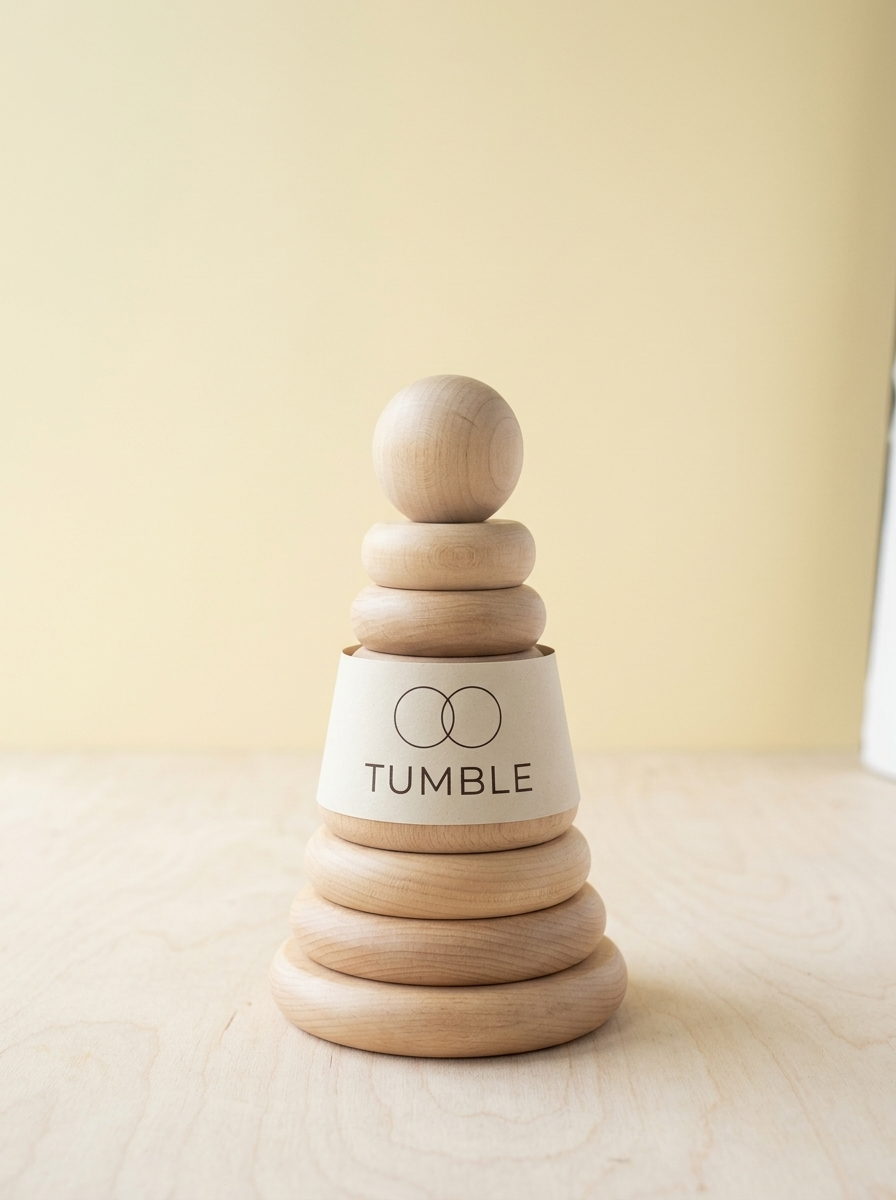 12–24 monthsThe stacking towerSix rings, one post, and nothing that needs a battery.Rs 3,900
 -
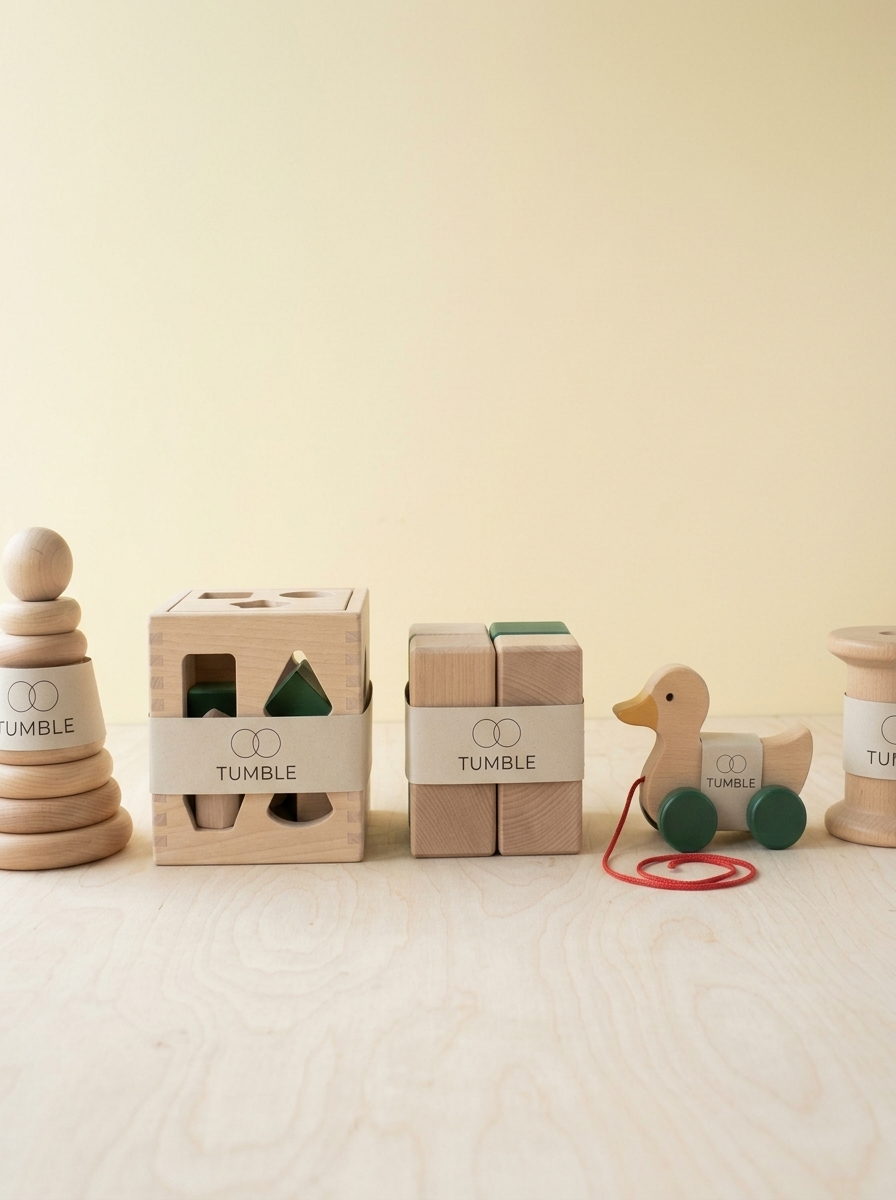 18–30 monthsThe shape sorterFour shapes to begin with. The other four live in the box until they are ready.Rs 4,600
 -
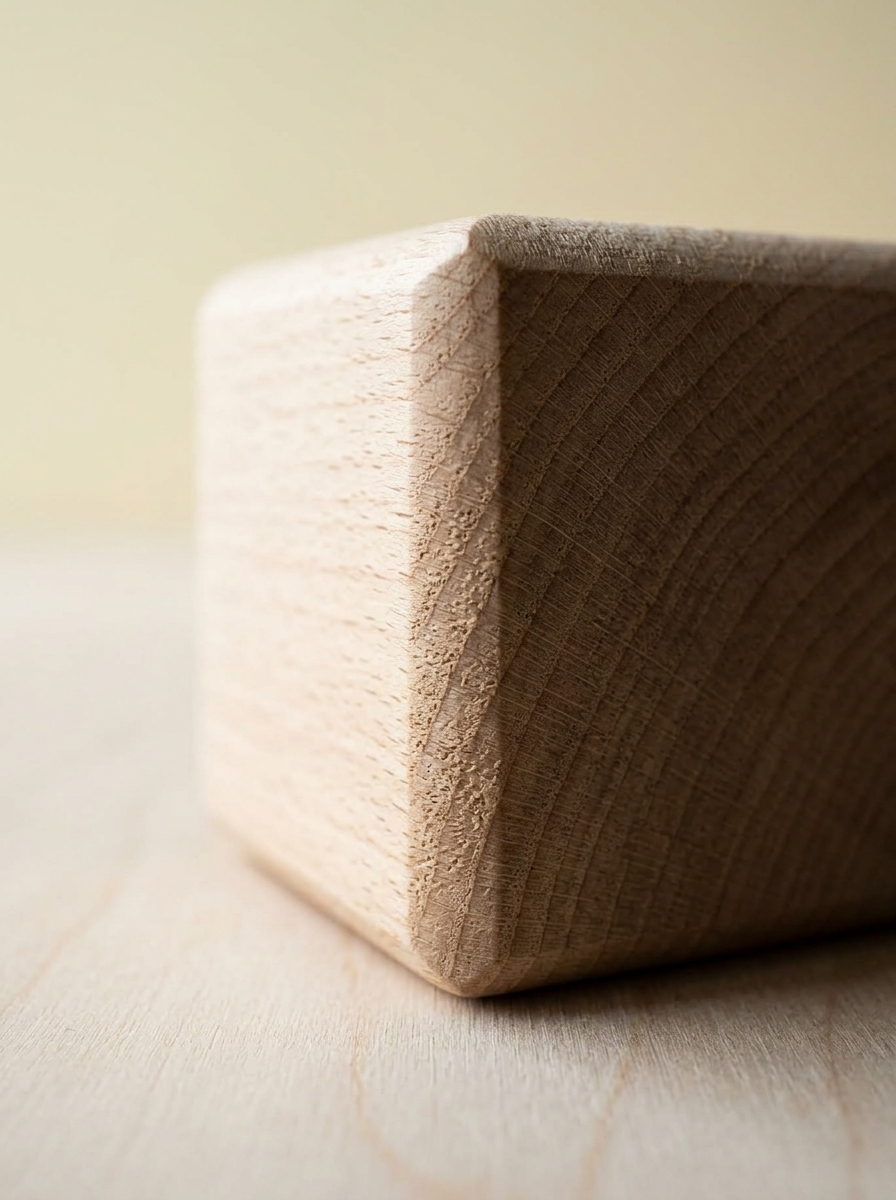
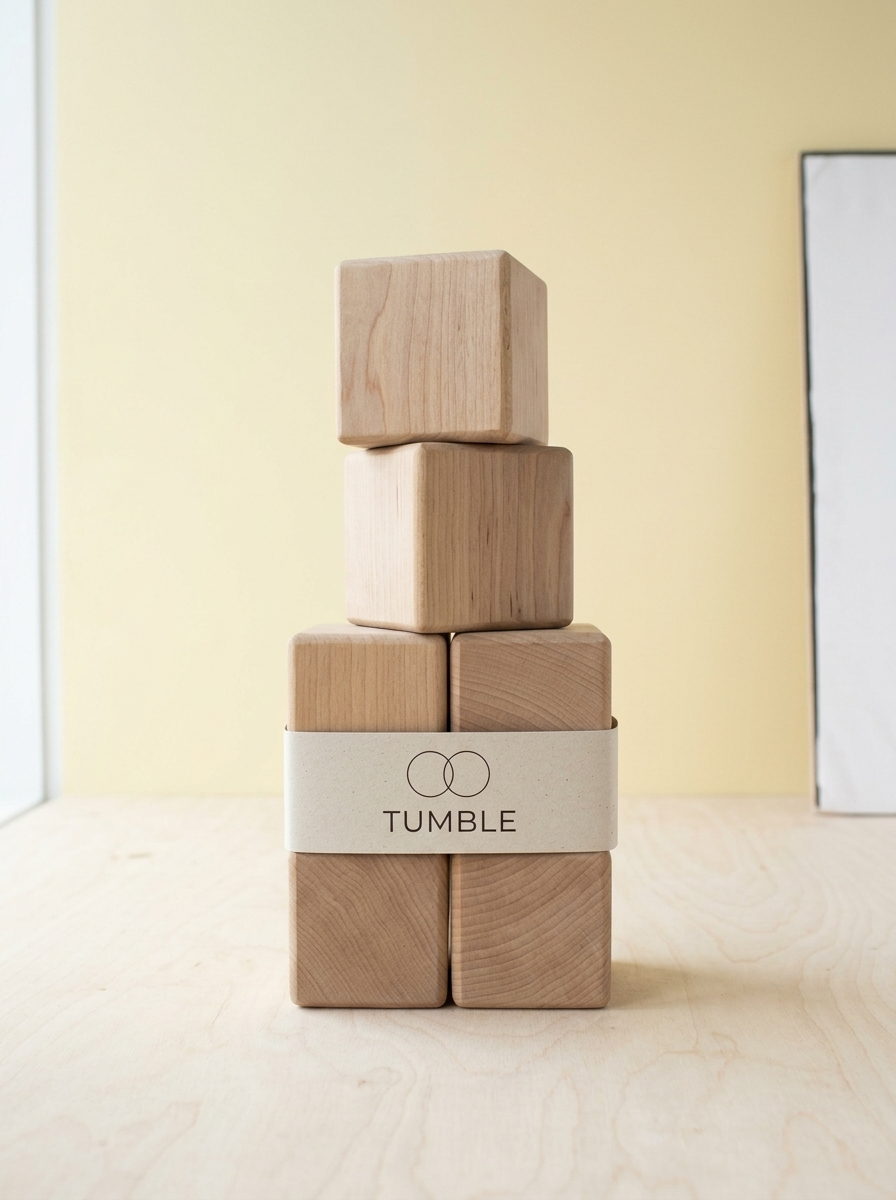 2 years and upThe block setTwenty chunky blocks, unpainted, sanded to a chamfer on every edge.Rs 5,400
 -
 12–36 monthsThe pull-alongWheels that turn properly on a rug, not just on a floor.Rs 2,800
What comes before, and after
The stage it is for, and the ones either side
Ages are a guide, not a test. Children arrive at these in their own order, and a toy that is early just waits on the shelf.
-
6–12 months
Holding and letting go
Moving one thing from hand to hand, and deciding to drop it.
- Grip
- Transfer
- Cause and effect
From usThe threading spool
Not ready for Anything that has to be stacked in order.
-
12–24 monthsThis one
Putting things onto things
Getting one object onto another on purpose, and letting go when they mean to.
- Grip
- Release
- Order
- Patience
From usThe stacking tower
Not ready for Sorting by shape — that comes a few months later.
-
18–30 months
Matching and sorting
Seeing that this shape goes in that hole, and trying the next one when it does not.
- Matching
- Rotation
- Trying again
From usThe shape sorter
Not ready for Building a structure that has to stay up.
-
2 years and up
Building something that stands
Balancing, planning two moves ahead, and rebuilding after it falls.
- Balance
- Planning
- Persistence
From usThe block set
This is a guide to play, not to development. Anything about how a particular child is growing is a question for their own doctor or health visitor, not for a toy shop.
Before it is wrapped
The things you find out after opening the box
Batteries, noise, assembly and lost pieces — answered here rather than in a review.
- Batteries
- None, in anything we makeNothing in the range has a speaker or a light.
- Noise
- Wooden clatter onlyIt is not silent — blocks on a floor are loud. There is nothing to turn down.
- Assembly
- NoneIt comes finished. No screws, no tools, no diagram.
- Pieces to lose
- 20One will end up under the sofa. We sell singles for every piece.
- The box
- Worth keepingIt is the storage. Printed card, no plastic window, and it survives being sat on.
- Cleaning
- Damp cloth onlyUnpainted wood, so no dishwasher and no soaking — it raises the grain.
Replacement pieces are sold singly for everything we make, for as long as we make it. A toy that cannot be completed again is a toy that gets thrown away.
The range
Toys that get handed down
-
Save 12%

Why they are plain
A toy that does less leaves more for the child to do
A block that lights up and counts out loud is doing the playing. Ours are sanded, unpainted and quiet, which is less impressive in a box and more interesting on the fourth afternoon.
- Beech and birch from named mills
- Water-based paint, or none at all
- Every edge chamfered and sanded by hand
- Replacement pieces sold singly
Shop by goal
Find what you need
Questions
What parents ask us
What age is it really for?
Every toy shows three stages: the one before, the one it is for, and the one after — in months, with what a child is usually doing at each. A stacking tower is 12 to 36 months; the page says why, not just the number.
Which safety standards does it meet?
EN 71 parts 1, 2 and 3 — mechanical, flammability, chemical — tested by a named lab, with the report date on each product page. Small-parts tested for under-threes where the age band includes them.
What if a piece goes missing?
Email us which piece and we send it, free, for two years from purchase. Every toy is made from parts we stock, not a sealed set.
Is the paint safe if it is chewed?
Yes. Colours are water-based, non-toxic and tested under EN 71-3 for migration; the unpainted pieces are beech finished with food-safe oil. The certificate is linked on each page.