Single-pigment watercolour
Twenty-four colours, each one a single pigment
Pigment index, opacity, granulation and lightfastness published for every colour — including the three that are not rated for permanence.
- UltramarinePB29
- Burnt SiennaPBr7
- Yellow OchrePY43
- Payne's GreyPBk6 + PB29
- AlizarinPR177
- Sap GreenPG7 + PY150
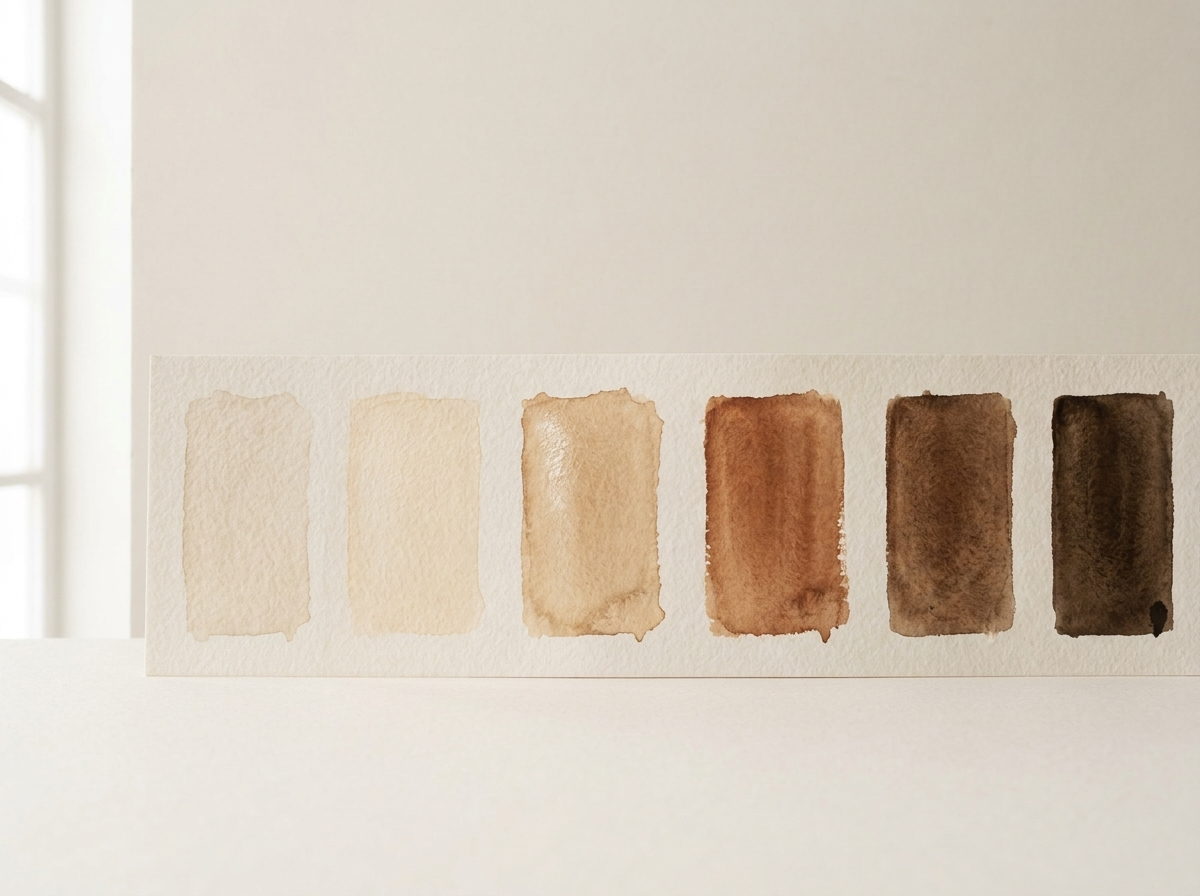
Screen colour is an approximation. The printed chart is painted by hand from the same batch.
Every colour, on paper
Pigment, opacity, granulation, lightfastness
Two paints with the same name can be different pigments. The index is the only thing that identifies a colour, so it is on every card.
5 of 6 rated permanent
-
Ultramarine
PB29- Lightfastness
- Excellent
- Opacity
- Semi-transparent
- Granulation
- Granulating
- Staining
- Low — lifts with water
- Pigments
- Single pigment
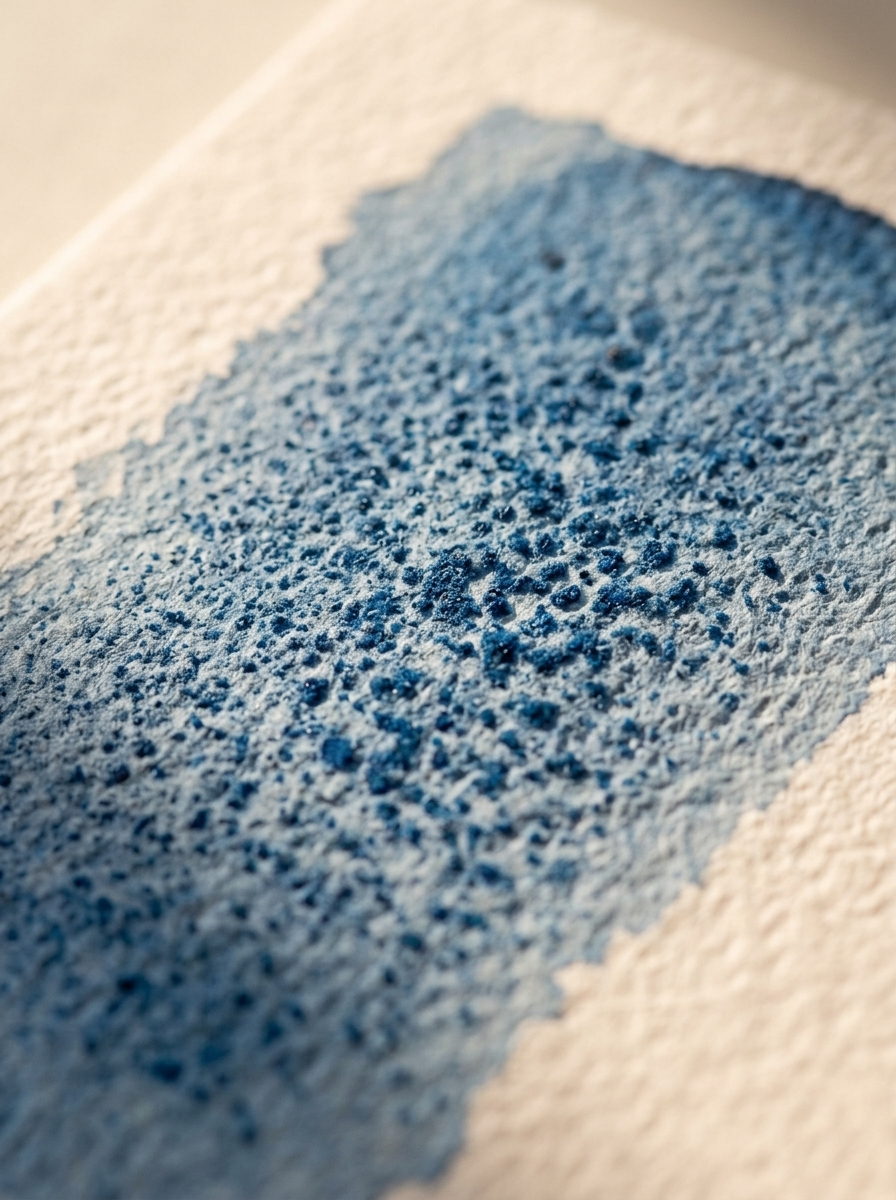
The one that settles into the tooth of rough paper. Mix it with Burnt Sienna for every grey you need.
-
Burnt Sienna
PBr7- Lightfastness
- Excellent
- Opacity
- Transparent
- Granulation
- Granulating
- Staining
- Low
- Pigments
- Single pigment
Earth pigment, so the colour varies a little between batches. We do not correct it.
-
Yellow Ochre
PY43- Lightfastness
- Excellent
- Opacity
- Semi-opaque
- Granulation
- Slight
- Staining
- Low
- Pigments
- Single pigment
-
Alizarin Crimson
PR177- Lightfastness
- Not permanent
- Opacity
- Transparent
- Granulation
- None
- Staining
- High
- Pigments
- Single pigment
Rated III: beautiful, and it will shift in a sunny room. For studies rather than for work you are selling.
-
Sap Green
PG7 + PY150- Lightfastness
- Very good
- Opacity
- Transparent
- Granulation
- None
- Staining
- Medium
- Pigments
- Two pigments
A convenience mix — say so. You can make it from our two singles and control the balance yourself.
-
Payne's Grey
PBk6 + PB29- Lightfastness
- Excellent
- Opacity
- Semi-transparent
- Granulation
- Granulating
- Staining
- Low
- Pigments
- Two pigments
What the ratings mean
ASTM lightfastness: I is excellent, II very good, III is not permanent, IV and V fade. We publish the maker's rating, and where a pigment has never been tested we write "not rated" rather than guessing at one.
Swatches on this page are drawn on screen and will not match paint on paper exactly. The printed chart is painted by hand from the same batch, and it is the one to judge a colour from.
The range
Colours painters come back for
-
Save 13%
On the palette
What mixes clean, and what turns to mud
Mixed on cold-pressed paper, one part to one part, left to dry. The results below are ours and the reasons apply to any brand's version of the same pigments.
If you buy three
Ultramarine, Burnt Sienna and Yellow Ochre will get you every grey, every green and most skies. Buy those, paint for a month, and then decide what is missing.
-
Ultramarine Burnt Sienna Mixes clean
Every grey from warm to cold, depending which way you lean it.
Complementary, both transparent, and both granulating — so the grey stays alive rather than going flat.
-
Yellow Ochre Ultramarine Mixes clean
The muted greens most landscapes actually need.
An earth yellow keeps the green from going acid, which is what a bright yellow does.
-
Alizarin Crimson Sap Green Carefully
A deep near-black that stays warm.
It works, but Sap Green is a two-pigment mix, so you are mixing three pigments and it goes dull quickly.
-
Burnt Sienna Yellow Ochre Mud
A flat brown with nothing in it.
Two granulating earths of the same family. There is no contrast left to make the mix interesting.
-
Payne's Grey Alizarin Crimson Carefully
Shadow tones for anything red.
Fine at low strength. Heavier and the black in Payne's Grey takes over and kills the crimson.
Swatches are drawn on screen and are an approximation. Any mix behaves differently at different strengths — these are all one to one.
How it works
One pigment, named
PB29, PR108, PY35 — the pigment index number is on every tube and every pan.
Lightfastness printed
The ASTM rating is on the label. We do not sell a fugitive colour as permanent.
Packed to survive the post
Pans boxed and taped, tubes capped and bagged. A leak is replaced.
Shop by goal
Find what you need
Questions
What painters ask
Will it fade?
Every colour carries its lightfastness rating — I, II or III on the ASTM scale — on the tube and on the page. Class I and II will not fade behind glass in a lifetime; the three Class III colours in the range say so plainly and are priced accordingly.
Is it a single pigment?
The pigment index is printed on every tube — PB29, PY150 — and the page says single or mixed. Sap Green is a name; PG7 plus PY150 is what is in it, and we tell you.
Why does the colour vary between batches?
Pigment is ground from mineral and plant sources that vary by lot, and we do not add dyes to hide it. The batch number is on the tube; buy from one batch for a single painting and expect small shifts between batches.
Can I buy a pan on its own?
Yes. Every colour in the set is sold as a single half pan or full pan, and the empty tins take any of them, so a set can be rebuilt one colour at a time.